
What Size Generator Do I Need for My Home?
When thinking of getting a backup generator, many people start with the question “What size generator do I need?” One that’s too small may prevent you from being able to run the things you need, while one that’s too big can be more expensive to buy and run.
Another important consideration is whether to get a portable generator that provides backup power on occasion or a permanently installed one that turns on automatically when the power fails. This guide walks you through the key factors to take into account. Getting a professional estimate and recommendation will ensure you make the right decision.
Why Generator Sizing Matters
The right standby generator can keep your essential systems running safely and reliably. Getting the proper size is important because you can easily overload an undersized generator. It can trip circuit breakers, stall, damage appliances or overheat.
A generator that’s too large can be more expensive to buy, install and run. Running it at a low percentage of its capacity can cause problems such as incomplete fuel combustion and reduced engine efficiency, leading to more frequent maintenance calls.
Home generator sizing needs to account for the running wattage of appliances, the amount of energy they use when operating and the higher wattage needed to start each device.
Generator Size Estimates by Home Size
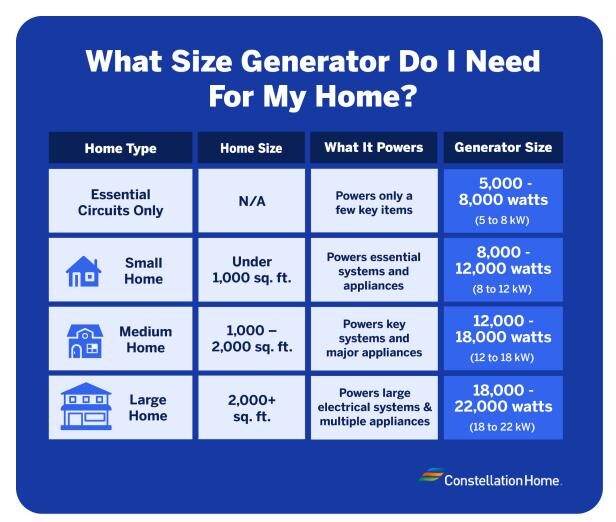
It’s important to have a professional perform a load calculation to get an accurate recommendation. Use these estimates as a starting point when determining the right whole-home generator size:
- Essential circuits only: If you only need to power a few key items, such as your refrigerator, sump pump, furnace fan and a few lights and outlets, you may only need a 5,000 to 8,000 watt (5 to 8 kW) unit.
- Small home (under 1,000 sq ft): For smaller homes, you can power essential systems and appliances with an 8,000 to 12,000 watt (8 to 12 kW) generator.
- Medium home (1,000 – 2,000 sq ft): Powering key systems and major appliances in medium-sized homes typically requires a generator between 12,000 and 18,000 watts (12 to 18 kW).
- Large home (2,000+ sq ft): Generator wattage for a house of this size runs between 18,000 and 22,000 watts (18 to 22 kW) or more. Larger homes have larger electrical systems and multiple appliances that draw more electricity.
Key Factors That Affect Generator Size
When considering how many watts are needed for a generator, it’s worth thinking beyond square footage. Our generator buying guide offers more details, but these general guidelines will help you estimate what size generator is best for your home:
- Starting wattage vs. running wattage of appliances: Calculate the wattage each device needs to start. Your generator must be able to handle these surges, plus the power they need to keep running.
- HVAC system requirements: Heating and cooling are the largest electricity draws affecting what size generator you need. Many HVAC systems require considerable power at start-up.
- Fuel type: Most standby generators use natural gas or propane, while portables run on gasoline. They have different runtimes and operating costs.
Also consider fuel availability during an extended outage. - Portable vs. standby models: Portable generators help power a few devices during short-term emergencies. If you need to power more devices and larger systems, permanently installed systems that automatically start when needed are likely the better option.
- Number of circuits powered: The more circuits you need to power, the larger your whole-home generator must be. If you just want to power a few devices, a smaller unit is often fine.
- Number, size and type of appliances: If you need to power more devices and systems, such as central air, this increases the wattage you’ll need. It’s also important to factor any essential medical devices into your calculations.
- Simultaneous usage: Consider how many appliances you’ll run at the same time. This is where getting professional home generator sizing can be helpful.
- Configuration of the transfer switch: Consider the needs of the manual switch, which you’ll use to turn on the generator during an outage. Alternatively, an automatic transfer switch detects an outage, then automatically manages circuits.
How to Calculate the Generator Size You Need
To calculate how many watts you need for a generator, you should factor in the surge power needed to start your devices (starting wattage) and their steady state draw (running wattage). Follow the steps below to come up with a general estimate. Before making a final decision, it’s recommended to have a licensed electrician perform a certified full load calculation.
Step 1: List your essential appliances
Start by making a list of the systems and devices you’ll need to run during a power outage, noting the wattage each uses. Typical items include:
- Refrigerators and freezers
- HVAC system electrical functions, including fans on a natural gas system or all-electric furnaces, central air conditioners and heat pumps
- Main lighting circuits
- Sump pump or well pump
- Medical equipment, such as oxygen concentrators
- Internet router and communication devices
- Kitchen essentials, including microwaves, coffee makers and stoves (even gas stoves need electricity for the oven to work)
If you only see amps and volts on a device label, you can easily calculate its wattage by using this formula: Amps × Volts = Watts.
Step 2: Total the running watts
Next, total the wattage of all devices on your list for an estimate of the running power you’ll need when everything is plugged in and operating continuously in a steady state.
Step 3: Factor in the highest starting wattage
Many devices require a surge of power when first starting up. Check owners manuals and manufacturer websites for phrases such as “starting watts,” “surge power” or “peak wattage.” Note which device has the highest starting wattage. Typically, this will be your HVAC system, refrigerator or well pump.
Add the starting watts of this device or appliance to your running wattage total to determine your maximum power draw at a given time.
Step 4: Determine your final estimate
Add your total running watts to the top surge wattage in the step above to get an estimate of your minimum generator size. Experts recommend adding a cushion of 10% to 20% for a margin of safety, as this can help prevent overloads and ensure that your unit isn’t consistently running at peak capacity.
Get the Right Generator with Help from Constellation Home
While estimating generator sizing yourself is helpful, only a licensed professional can provide an accurate and informed measurement. They’ll calculate your actual electrical load and factor in important details such as electrical panel configuration and start-up surges. The professionals at Constellation Home have the skill and experience to size your home generator and install it safely.
Request an Estimate Schedule Service
Explore Constellation Home Generator Installation Services in Your Area
Constellation Home is here for you with local expertise, a wide selection of top generator brands and knowledgeable sizing advice. We handle the installation process from start to finish and offer a 100% satisfaction guarantee on all our work. Use the links below to get more information on our whole-home generator services in your area, and take the next step in securing backup power for your home.
Generator Installation in Maryland
Frequently Asked Questions About Generator Sizing
Can I run my central air conditioner on a generator?
What’s the difference between running watts and starting watts?
