
When it comes to comfort, energy efficiency and the costs of heating and cooling your home, the size of your heating, ventilation and air conditioning (HVAC) system plays an important role.
If your system is too big, you might experience uneven temperatures. If your system is too small, it may have to run constantly. The result is wasted energy, high maintenance costs and a shorter system life.
That’s why it’s important to know how to determine the size of a heating and air conditioning system that’s right for your home. This guide outlines how to make a size estimate and when to get professional help for an exact measurement.
Why HVAC Sizing Matters
HVAC system size affects temperatures, humidity, energy use and wear and tear. If you get it wrong, you risk being uncomfortable and potentially spending more up front and over the long term.
Oversized units are prone to short cycles, when the unit turns on and off frequently. The result is poor humidity management and uneven temperatures. Undersized units run constantly without being able to maintain a comfortable temperature. In both cases, you end up wasting energy and increasing system wear.
For a consistently comfortable environment, efficient energy use and a longer lifespan with fewer repair bills, it’s vital to get heating and cooling sizing right.
Quick HVAC Sizing Estimates by Home Size
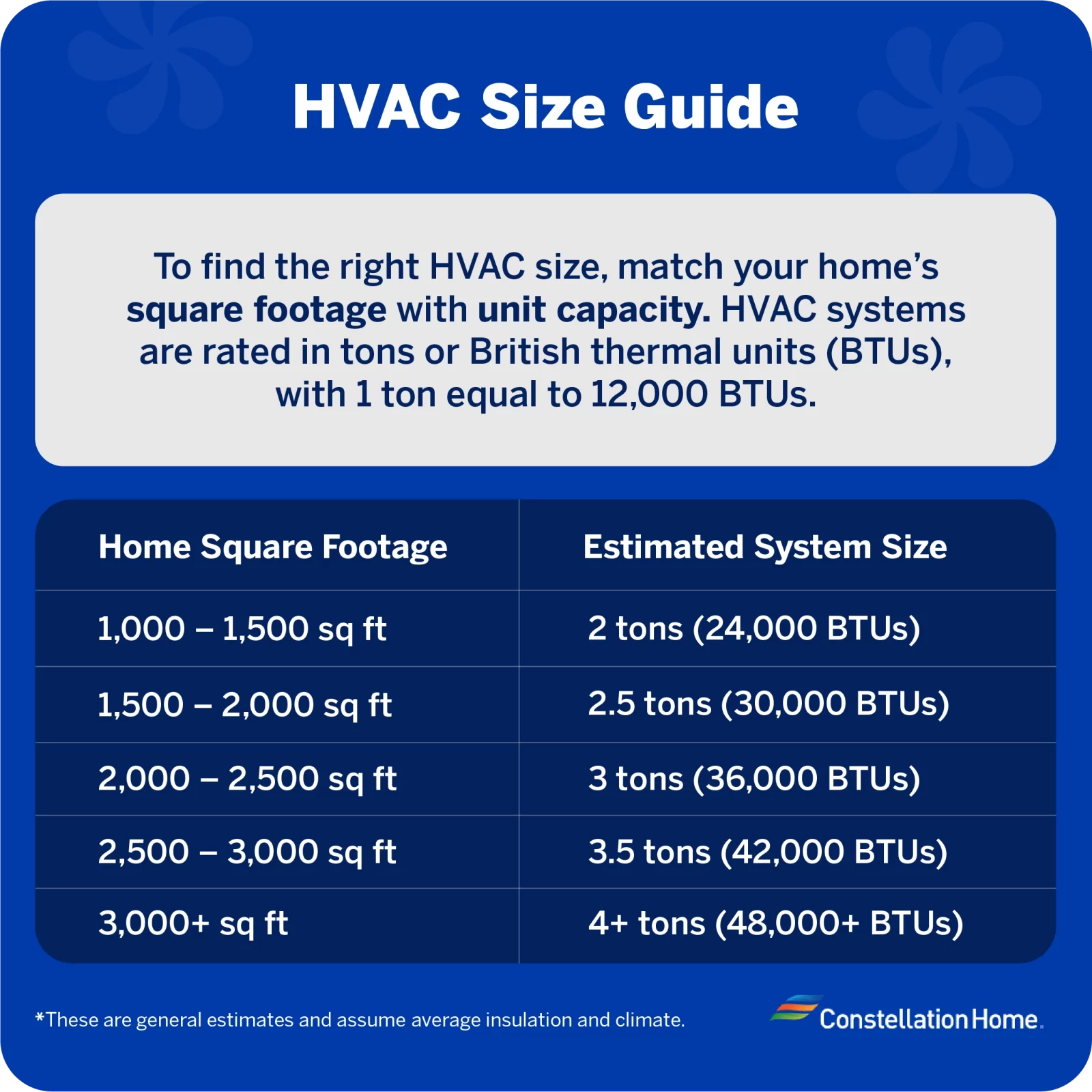
The first step in determining what size HVAC unit you need is to match your home’s square footage with unit capacity. Systems are rated in tons or British thermal units (BTUs). One ton equals 12,000 BTUs, which is simply a way of measuring how much heat the system can remove.
You don’t need to understand the science behind tonnage or BTUs. What’s important is that they measure the capacity of a system. These measurements are useful both for matching HVAC size to your needs and comparing systems.
Key Factors That Affect HVAC Size
Knowing your square footage and system capacity is a good start, but you’ll need to factor in other things to fully answer the question of “what size HVAC do I need?”
- Climate zone: The location of your home makes a big difference. If you live somewhere with a warm climate, you may need greater cooling capacity. If you live in a colder location, heating efficiency may matter more. Humidity plays a role, too.
- Insulation: A system of any size can better maintain a comfortable temperature in a well-insulated home. If you don’t have enough insulation, you may lose cooled or heated air. Your HVAC system won’t be as efficient, as it needs to work harder to keep up with the losses.
- Ceiling height: Homes with high ceilings have a greater volume of air to cool or heat compared to homes with the same square footage and standard-height ceilings. You may need an HVAC system with a higher capacity to keep your home comfortable.
- Type and number of windows: Inefficient windows affect how well your home maintains a comfortable temperature. The more windows you have, the greater the effect. Single-pane windows offer no insulation. Replacing them with double- or triple-pane windows that have low-emissivity coatings can lower the demand on your HVAC system.
- Ductwork design and condition: Ductwork that’s designed for efficiency doesn’t need as large or powerful of an HVAC system. If you insulate your ducts, fix any leaks and keep them clean, you can limit heating and cooling distribution loss.
- Number of floors and layout: How air circulates in your home affects heating and cooling sizing. If you have two floors, you may find your upper floors are warmer. Air may not circulate as well in long layouts, requiring zoned controls to keep temperatures even.
- Orientation and sun exposure: If the windows and doors of your home face mostly west or south, they get more sun and contribute to solar heat gain, making your home feel hotter. Homes with north-facing windows and doors don’t receive as much heat from the sun, which increases demand on your HVAC system in winter.
- Occupancy: The more people and pets in your house, the greater the demand on your HVAC unit. More people means more heat and humidity, as well as greater demand for fresh air.
Why a Manual J Load Calculation is Best
Considering all the factors that influence how to determine the size of a heating and air conditioning system, it pays to get help from a professional. Instead of relying on your best guess, a technician uses a standardized and scientific approach to calculate what size HVAC unit you need.
The Air Conditioning Contractors of America developed a precise metric, called a Manual J load calculation, based on engineering research and field testing. When making a Manual J load calculation, air conditioning professionals consider these details of your home:
- Square footage and layout
- Climate
- Insulation
- Ceiling height and home volume
- Window size, type and orientation
- Ductwork design and condition
- Number of floors and layout
- Number of occupants and internal heat sources
With a precise calculation, you can buy an energy-efficient system with lower maintenance requirements and a longer lifespan. Most of all, you can enjoy a consistently comfortable home in every room and season.
Get the Right HVAC Fit with Help from Constellation Home
The highly trained technicians from Constellation Home can take the guesswork out of sizing your system. Your decision influences both the purchase price and the cost of running and maintaining the system for years, so making a good choice is crucial.
We’ll give you a calculated recommendation to ensure performance, efficiency and comfort. You can be confident you’re investing in the right sized system for your home.
Frequently Asked Questions About HVAC Sizing
What happens if my HVAC unit is too big?
If your HVAC unit is oversized, it heats and cools your home quickly. As a result, it turns on and off more often in short cycles. This leads to uneven temperatures and makes it difficult for the system to control humidity. Short cycles use more energy and increase the wear and tear on your unit. You may experience higher maintenance costs and a shorter useful life of the unit.
Is it better to undersize or oversize an HVAC system?
Both situations decrease the performance of your system and create energy inefficiencies. Undersized systems that struggle to maintain temperature and oversized ones that create uneven temperatures both waste energy, wear out faster and don’t deliver the comfort of a properly sized system.
Does climate affect HVAC size?
Yes, climate is one of the most important factors in sizing your HVAC system. If you live in a hot and humid area, you’ll need higher cooling capacity with the ability to effectively dehumidify your spaces. In cold areas, efficient heating is important, and you may need to add humidity to the air.
How do I size an HVAC system for a two-story house?
Sizing a heating and cooling system for a two-story house can be more complex than for a single-story house. Heat rises, making the second floor warmer than the first. Air flow may also be inconsistent. You may need a zoned system, multiple units or fans to improve air flow.
